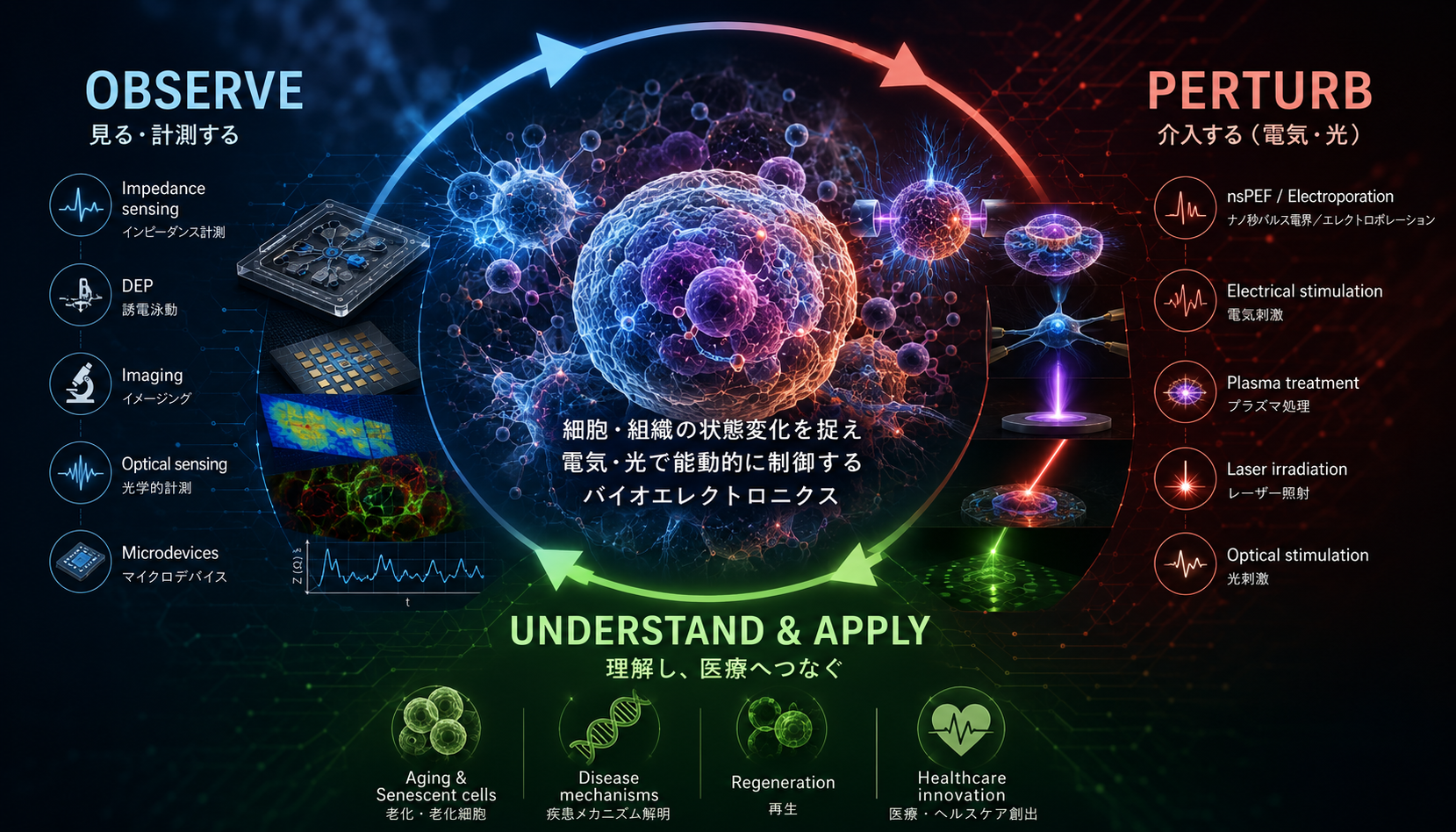
The Bioelectronics Laboratory develops innovative bioelectronic technologies that enable high-precision sensing and active control of cellular and tissue functions through the integration of electrical and optical engineering.
Our research focuses on senescent cells and diseased tissues, aiming to create next-generation medical and healthcare technologies based on electrical stimulation, optical stimulation, bioimpedance analysis, dielectrophoresis, and plasma technologies.
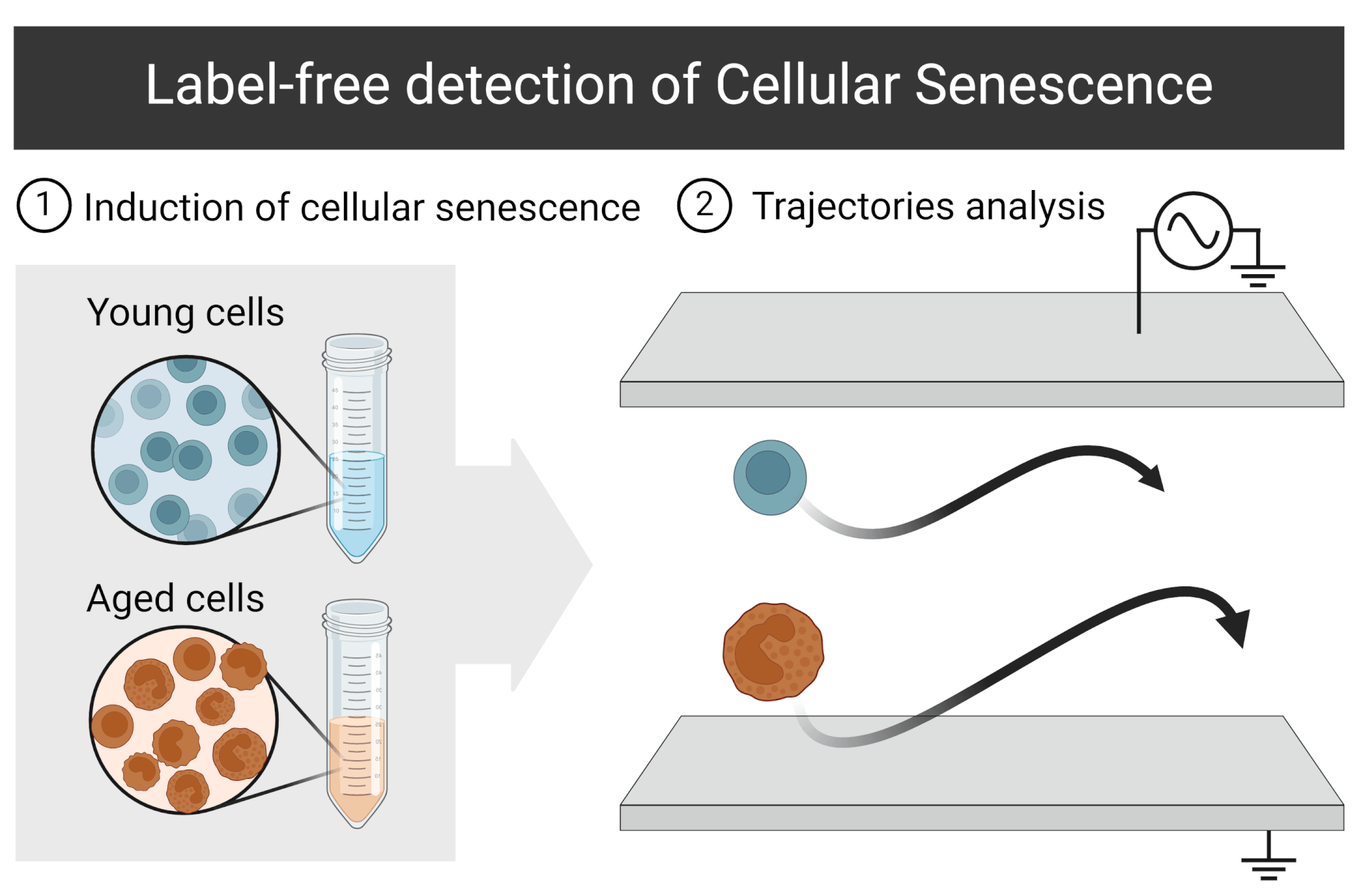
Senescent cells play important roles in aging-related diseases and chronic inflammation. We develop label-free detection and separation technologies based on dielectrophoresis by exploiting differences in the dielectric and membrane properties of senescent cells.
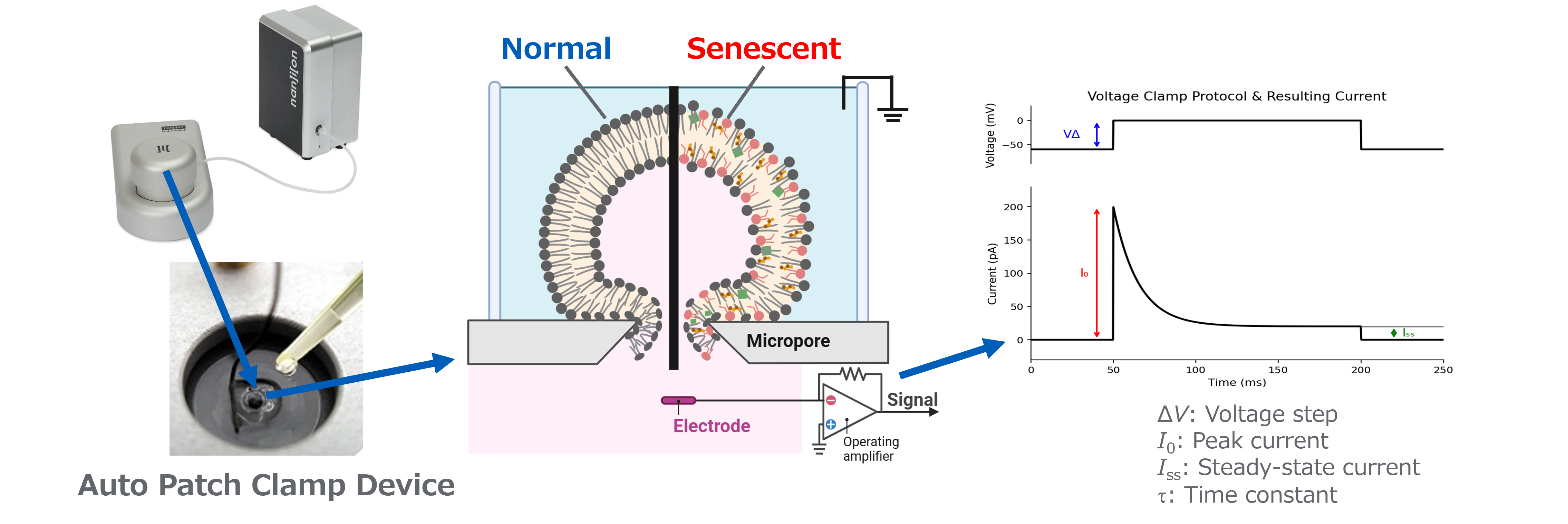
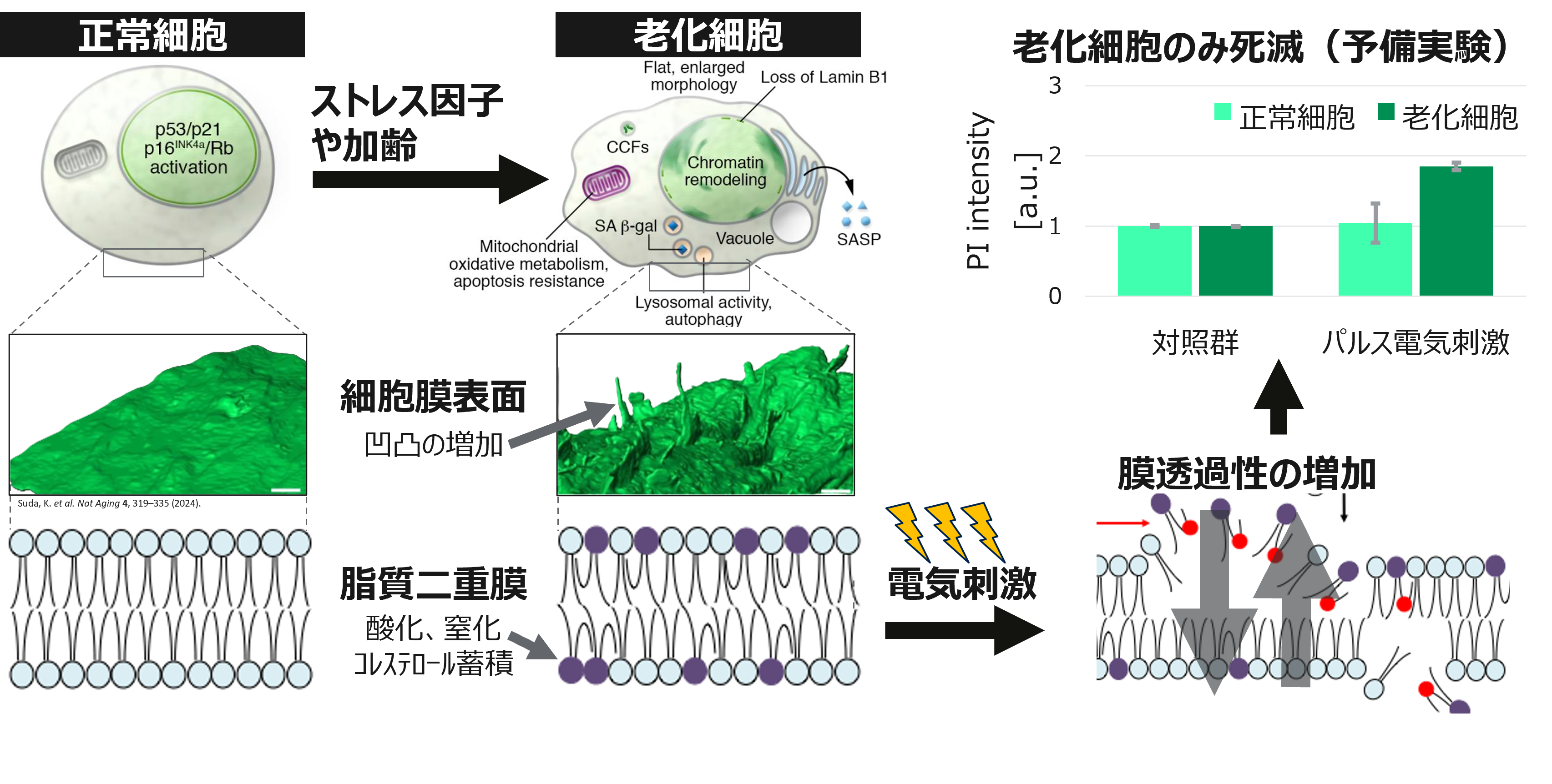
Senescent cells exhibit alterations in membrane lipid order and membrane permeability. Using bioimpedance measurements and fluorescence imaging, we investigate these changes to achieve sensitive characterization of cellular states.
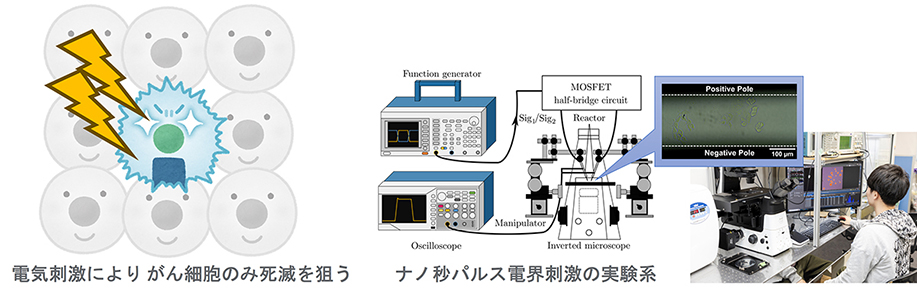
While senolytic drugs have shown promising therapeutic potential, systemic administration remains associated with side effects and off-target toxicity. We are developing physical senolytic technologies that selectively eliminate senescent cells using nanosecond pulsed electric field stimulation.
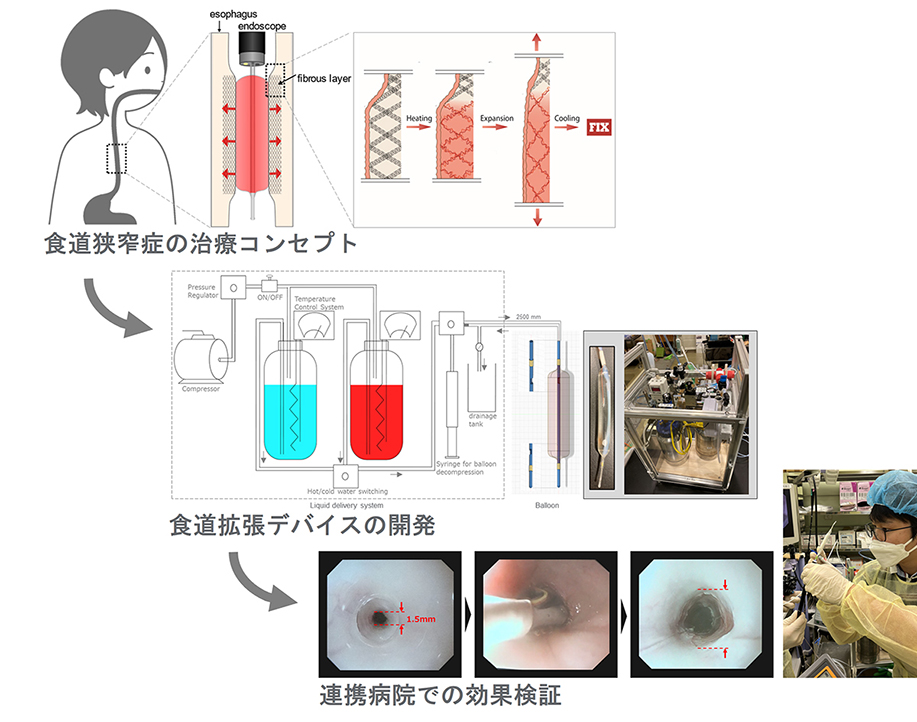
We develop minimally invasive therapeutic devices for fibrotic diseases such as esophageal strictures. By integrating electrical engineering, thermal engineering, and biomedical engineering, we aim to establish novel treatment strategies that reduce patient burden and improve treatment outcomes.
Atmospheric-pressure plasma and high-intensity electric fields can influence cellular membranes and intracellular signaling pathways. We investigate these interactions and explore applications in cancer therapy, aging research, and tissue regeneration.